What Actually Photographs on the 2026 Show Floor: Overhead Hero Products, Conveyor Belts and Analog Play

Every 2026 booth trend photographs brilliantly or terribly. The difference is who is holding the camera.

What Actually Photographs on the 2026 Show Floor: Overhead Hero Products, Conveyor Belts and Analog Play

Event Marketer’s mid year report says the booths winning attention are tactile, oversized and nostalgic. Here is how each trend behaves in front of a lens, written for the exhibit house and the marketing manager choosing a build.

Trade show booth design that photographs well is not the same thing as trade show booth design that looks good in a rendering. The 2026 trends report from Event Marketer names five things pulling attention on the show floor this year: analog and tactile play, oversized hero products hung overhead, conveyor belts, retro nostalgia and dense product walls. We have photographed versions of every one of them. Some of them are a gift to a camera. Some of them are a trap.

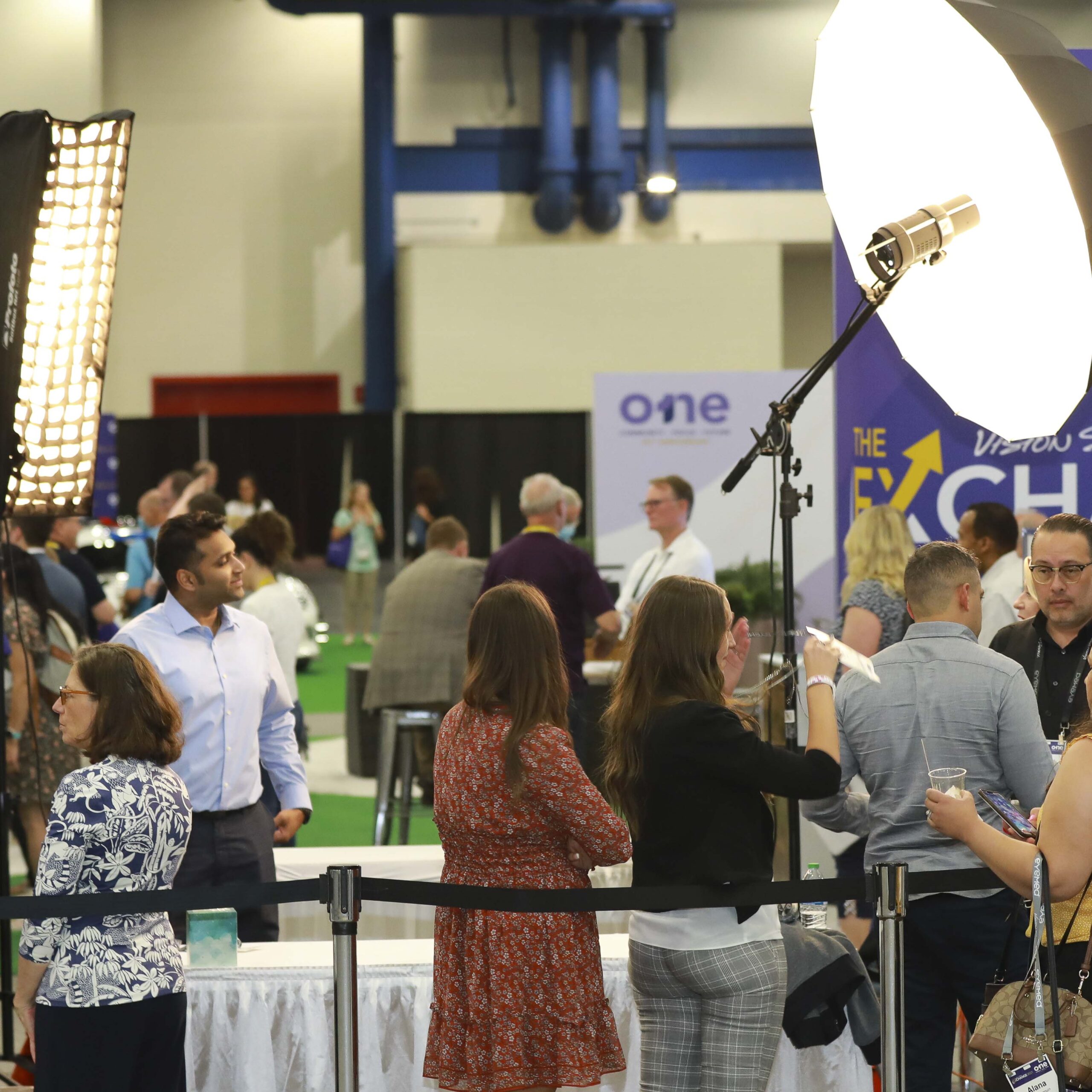
Wide angle view of a trade show floor featuring a large pavilion with overhead signage and attendee traffic

Overhead hero products want a low angle and a clean ceiling

The biggest trend of the year is the product in the air: a car body, a turbine blade, a bottle the size of a canoe, suspended above the booth so it reads from across the hall. In a rendering it looks heroic. On the floor, the ceiling above it is a grid of trusses, HVAC and rigging points, and a photo taken at eye level puts all of that in the frame.

As a result, the frame that sells an overhead build is shot low and tight, from a knee or from the floor, with the product filling the top of the frame and the crowd underneath. Ask your booth designer to keep the underside of the hero clean and lit, because the underside is what the camera sees. Backlit lettering under a suspended product is the single best decision an exhibit house can make for photography.

Furthermore, put people under it. A hero product with nobody beneath it is a sculpture. The same product with three attendees looking up is a story.

Conveyor belts need a slow shutter and a marshal

Conveyor belts carrying product samples past attendees are the surprise hit of 2026, and they are the hardest thing on this list to photograph. Frozen with a fast shutter, a moving belt looks like a shelf. The frame that works is a half second exposure from a monopod, so the product streaks and the attendees stay sharp, and it takes a few tries to get right.

Equally important, someone has to keep the belt full during the photo window. The photographer needs a contact at the booth who can restock the belt and hold the aisle for ninety seconds at the busiest half hour. That request goes in the exhibitor brief before the show, not on the floor.

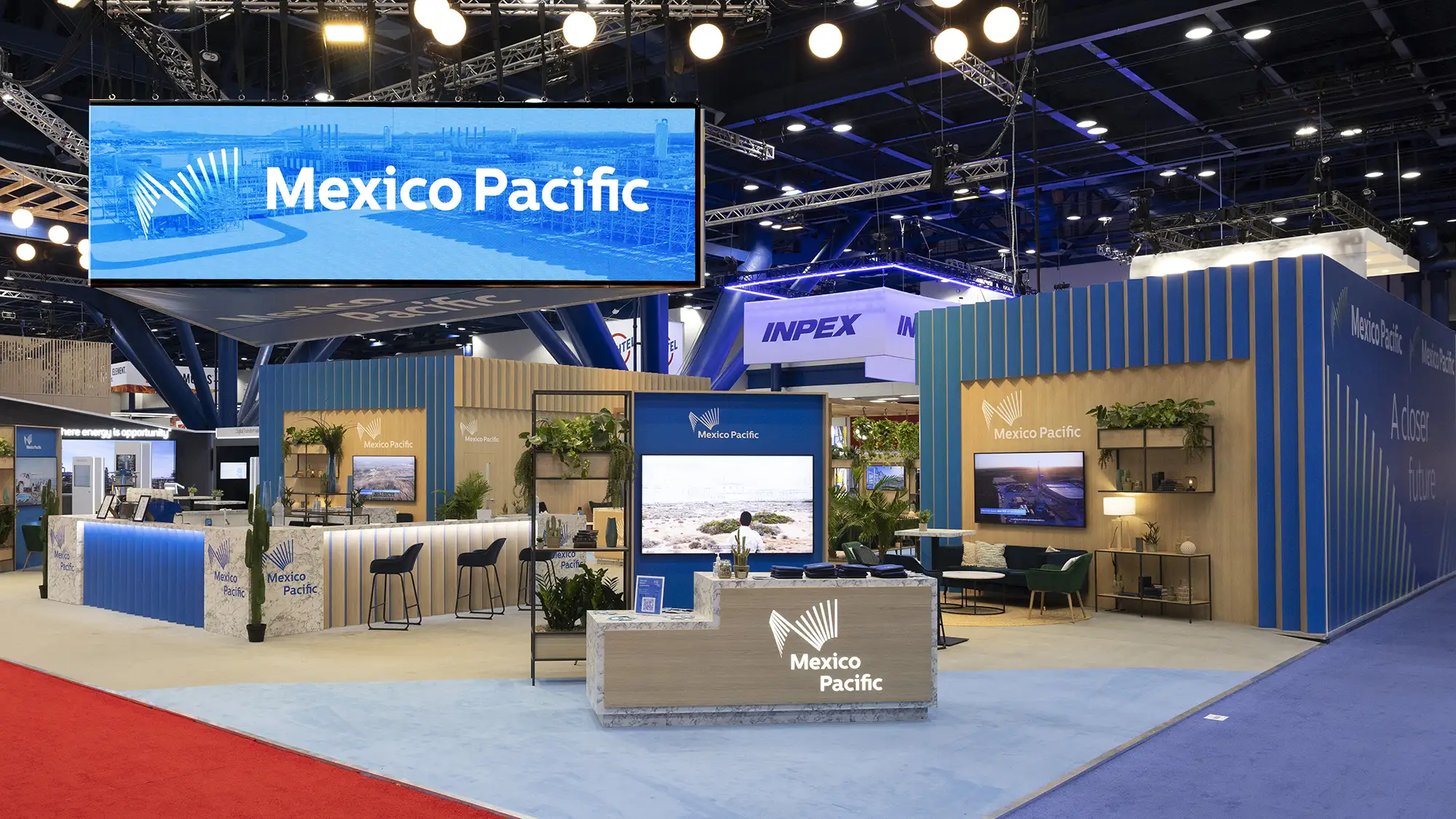
Large island exhibit booth photographed clean before doors open, the record shot every exhibitor needs

Analog play only works with real hands on it

Dials, buttons, cranks, oversized board games and build it yourself stations are everywhere this year, and they photograph beautifully for one reason: hands. An attendee turning a dial is a photo of engagement. An empty dial is a photo of a dial. The photographer’s job is to be at the play station when the line is longest, and the exhibitor’s job is to let real attendees play rather than staging staff.

Additionally, the reaction shot matters as much as the hands. Shoot the face of the person who just won, lost or built the thing. That frame is the one your social team wants, and it is the one the sponsor recap deck needs.

Moreover, keep the play surface at a height a camera can see over. Tabletop games at 30 inches disappear behind a crowd. Standing height stations at 40 inches or more read from ten feet away.

Trade show booth engagement photography of attendees interacting with exhibitor staff at a hands on demo
Houston exhibitor booth photographer capturing booth staff engaging attendees at a product demo
Houston trade show photography of attendees in a booth engaging with an interactive display
Full day trade show booth photographer in San Diego capturing exhibitor staff mid conversation with attendees

Retro nostalgia is a lighting problem

The retro builds, from arcade cabinets to diner counters to 1990s living rooms, run on colored light: neon, CRT glow, string bulbs. That light looks warm in person and can turn to orange mud in a photo if the photographer balances for the hall. The fix is shooting the booth as its own room, balanced for its own light, with the exhibit hall allowed to fall away behind it.

That said, nostalgia builds are the most shared booths on social media this year, because attendees photograph themselves in them. Give them a spot to do it. A marked selfie point with a clean backdrop and the logo in frame turns every attendee into a second photographer, and our onsite printing station can hand them a branded print on the way out.

Send us the booth rendering and we tell you how it will photograph

Every exhibitor we cover gets a clean build shot before doors, staffed and demo coverage during exhibit hours, and the same day delivery your social team needs. One clear number for the show.

Dense product walls need one hero, not fifty

The product wall, forty SKUs on a lit grid, is back. It photographs as wallpaper unless the wall has a focal point. Ask the designer for one product pulled forward, one shelf lit brighter than the rest, or a single oversized unit in the center of the grid. The camera needs somewhere to land, and so does the attendee’s eye.

In addition, product walls suffer from reflections. Glossy packaging under hall lighting throws hot spots that no amount of retouching fixes cleanly. A matte laminate on the shelf faces and a slight downward tilt on the top row cost nothing and save the photo.

San Diego trade show photography showcasing a booth build with branded structure and attendee traffic
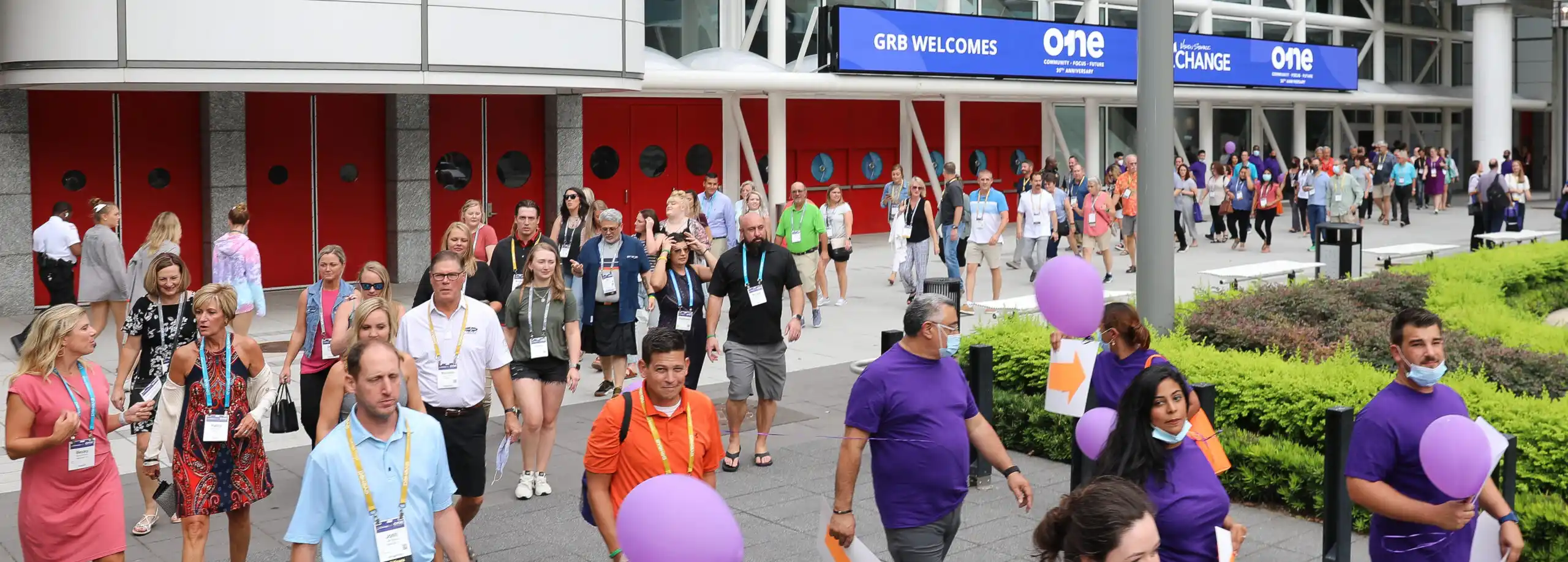
Trade show booth photographer capturing the ADNOC exhibit booth with attendees on the show floor

The two frames every booth still needs

Beyond the trends, two frames have not changed. The first is the clean build, shot before doors open on day one, straight on and wide, with every light on and every screen playing. That is the record the exhibit house needs and the photo that goes in next year’s RFP for a bigger space.

The second is the working booth: staff mid conversation, badge scans in progress, a demo with an attendee’s hands on it. Our earlier posts on why booth photography matters and booth traffic that converts cover those in depth. This year’s trends are about what fills the space between those two frames.

Where we have shot these builds

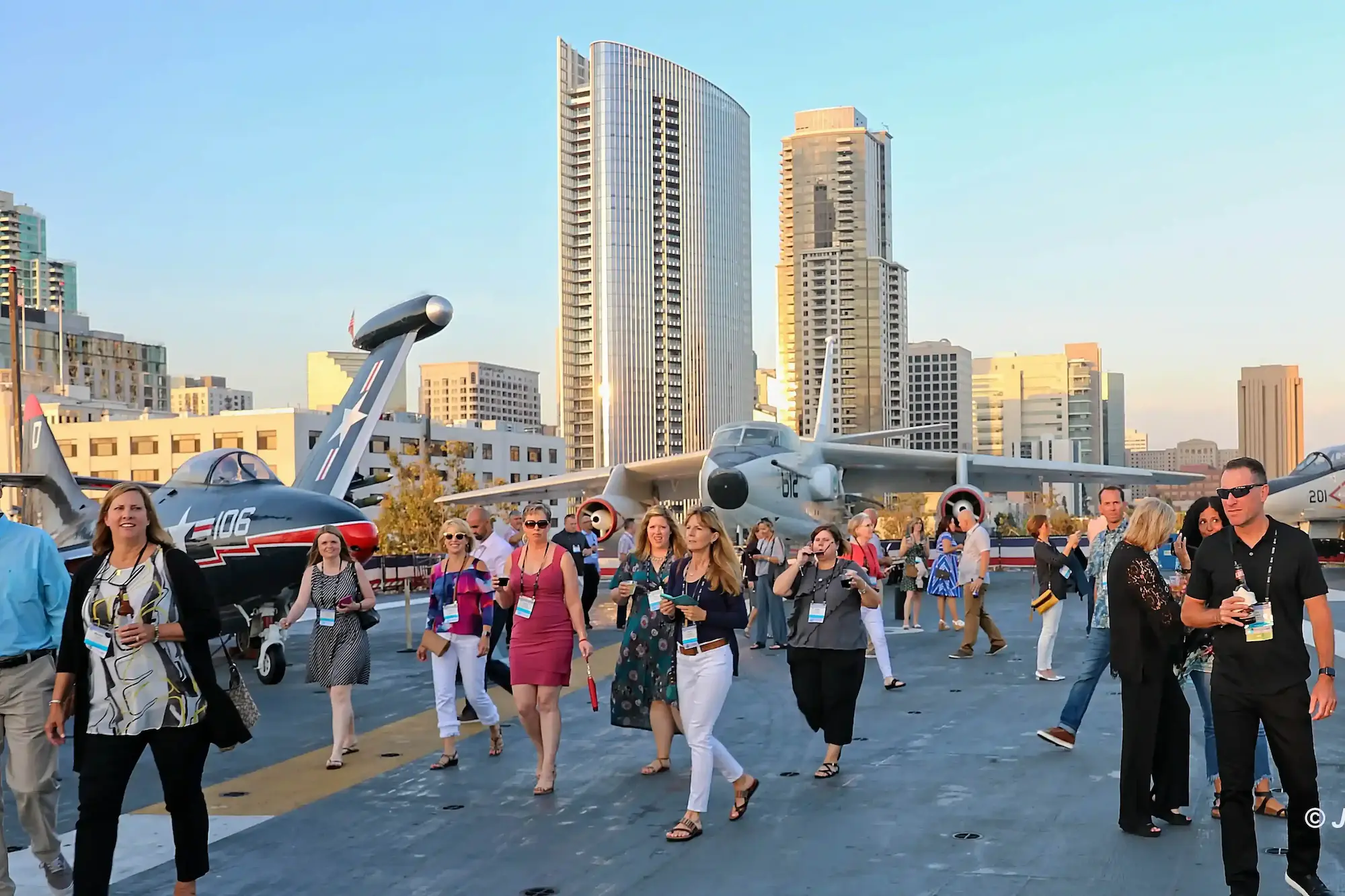
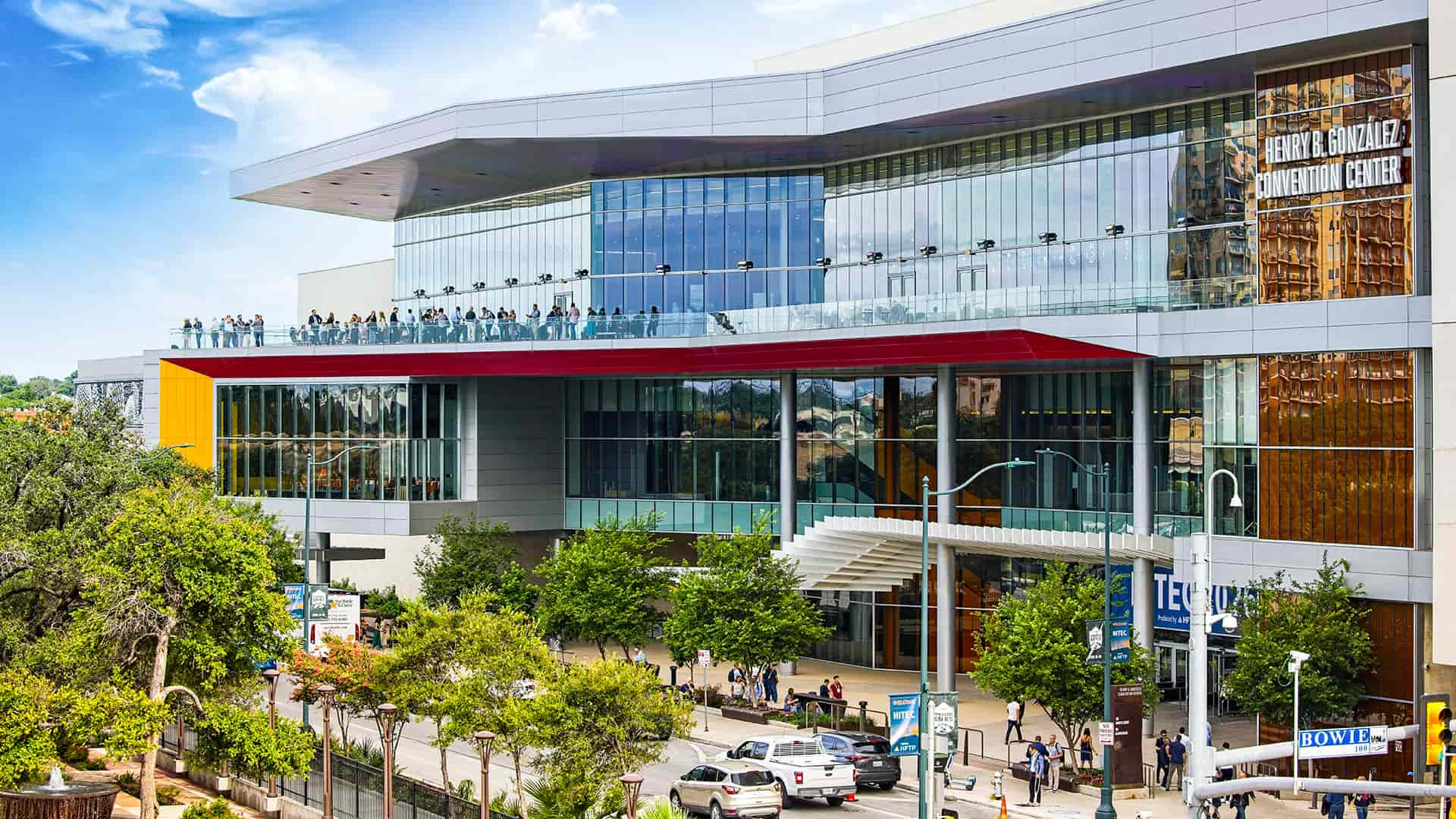
We have covered builds like these at the San Diego Convention Center, the George R. Brown in Houston, the Kay Bailey Hutchison Convention Center in Dallas, the Henry B. Gonzalez in San Antonio and the Sands Expo in Las Vegas. If your exhibit house is proposing one of these builds for a 2027 show, send us the rendering and we will tell you which angle will sell it, before the booth is fabricated. Our trade show photography services page lays out what booth coverage includes.

Crowded, brightly lit trade show floor with visitors walking the aisles between exhibit booths

FAQ: Booth design and trade show photography

What booth design trends photograph best in 2026?

Analog play stations with real attendees at them, overhead hero products shot from a low angle with a clean lit underside, and retro nostalgia builds photographed as their own room. Product walls and conveyor belts also work, but only with a focal point and a slow shutter respectively.

How do you photograph a product suspended above a booth?

Low and tight, from knee height or the floor, with the product at the top of the frame and attendees beneath it. The underside of the product must be clean and lit, because that is the surface the camera sees.

Why do conveyor belt booths look flat in photos?

Because a fast shutter freezes the belt into a shelf. The frame that works is a half second exposure from a monopod so the product streaks while attendees stay sharp, with the belt kept full during the photo window.

What should an exhibit designer change to make a booth photograph better?

Backlit lettering under overhead elements, matte finishes on product shelves, play stations at standing height, one focal product on any wall, and a marked selfie point with the logo in frame.

Does Professional Images Photography cover trade shows outside Texas?

Yes. We photograph exhibitor booths nationwide, including the San Diego Convention Center, the Sands Expo in Las Vegas, the Phoenix Convention Center and hotel programs in Chicago and Orlando, as well as every major venue in Texas.

Professional Images Photography photographs booths in every city your show lands in

Trade show booth, exhibitor and show floor photography in San Antonio, Austin, Dallas, Houston, San Diego, Phoenix, Chicago, Orlando and Las Vegas, delivered the same day. See where we work.

The Sponsor Recap Deck: Eight Event Photos That Get Your Sponsors to Renew

The recap deck is the renewal pitch. Shoot it like one.

The Sponsor Recap Deck: Eight Event Photos That Get Your Sponsors to Renew

Planners are being asked to prove value this year, and sponsors are the money that keeps a meeting alive when registration dips. Here is what they want to see in the post event report.

Sponsor recap photos are the part of the post event report that decides whether the check clears again next year. Most recaps are a logo wall, an attendance number and a thank you slide. The sponsors who renew received something better: proof, in pictures, that their money bought attention. After photographing sponsor programs for more than a decade, here are the eight frames that do that job, and how to make sure your photographer shoots them.

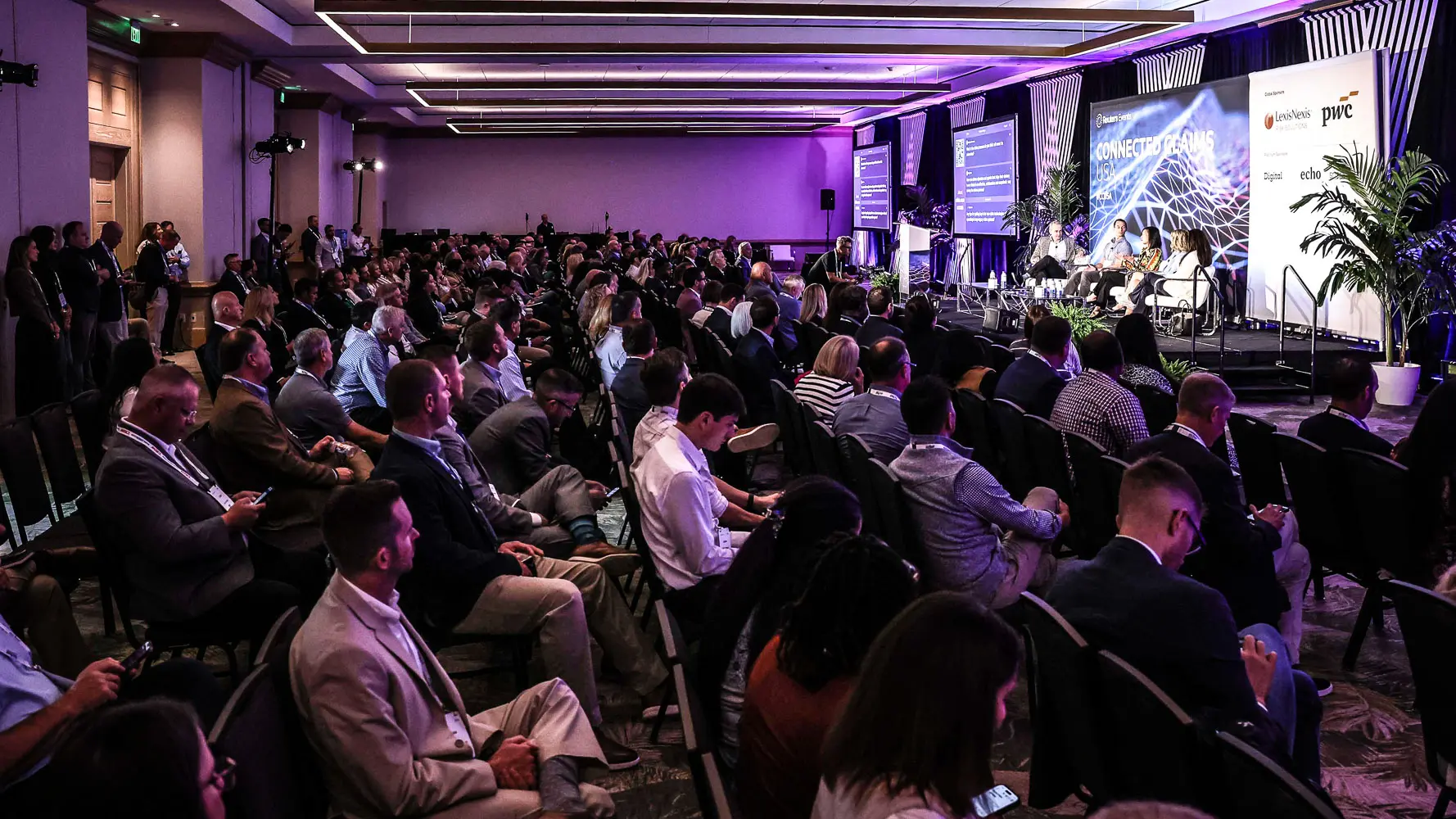
Packed general session with sponsor logos on the stage screens at a Fairmont Austin conference, a sponsor visibility photo

Why the recap deck matters more in 2026

First, the context. The 2026 Meetings Today trends survey found planners naming declining perception of their value as the biggest threat to their careers, and Northstar has four in ten planners expecting attendance to drop. When registration softens, sponsorship carries the budget. A sponsor who renews at the same level is worth more to the meeting than fifty new attendees.

Furthermore, your sponsor’s marketing manager has a recap to write too. They have to justify the spend to their own boss with the same deck you send them. If you hand them eight strong photos, you have written half their internal report, and you have made the renewal conversation easy.

As a result, we treat the sponsor deliverables as a separate shot list on every program, with a named person from the sponsor side who receives the frames the same day.

The eight frames every sponsor wants

One, their logo on the general session screen with a full room in front of it. Two, their branded lounge or activation in use, with real attendees, never empty. Three, the line. A queue at a sponsored headshot station or a demo is the single most persuasive sponsorship photo there is, because a line is attention you can count.

Four, their speaker on stage, shot from the audience so the room is in the frame. Five, the badge scan or sign up moment at their booth. Six, their signage in the natural flow of traffic, at the coffee break or on the concourse, rather than photographed in isolation. Seven, an attendee holding or using whatever they gave away. Eight, the sponsor’s own team, smiling, in front of their activation, because that photo goes on their LinkedIn before yours goes anywhere.

Moreover, every one of those needs to be tight enough that the logo is legible at phone size. A wide shot of the exhibit hall with a sponsor’s pavilion somewhere in the middle is a venue photo, not a sponsor photo.

Branded headshot lounge running inside an exhibit hall, the sponsor recap photo that proves the activation drew a crowd
San Diego corporate activation photography of a sponsor experience with attendees engaged, shot for sponsorship fulfillment
Attendees posing with a themed costumed character at a sponsor activation, a photo sponsors reuse on social media
Attendees queued at a branded trade show headshot lounge, photographed for the sponsor's post event report

The line is the money shot

Of the eight, the line is worth its own section. A sponsor who paid for a headshot lounge, an onsite printing station or a demo bar wants to know one thing: did people show up. A photograph of twenty attendees waiting their turn answers it without a spreadsheet.

Equally important, lines happen at predictable times: the first coffee break, the hour before lunch, and the twenty minutes after the last general session. Those are when the photographer has to be standing at the activation, not across the hall at a breakout. We build the sponsor list around those windows.

That said, the empty activation photo is still worth one frame, shot before doors, so the sponsor has a clean record of the build. It just should never be the hero of the recap.

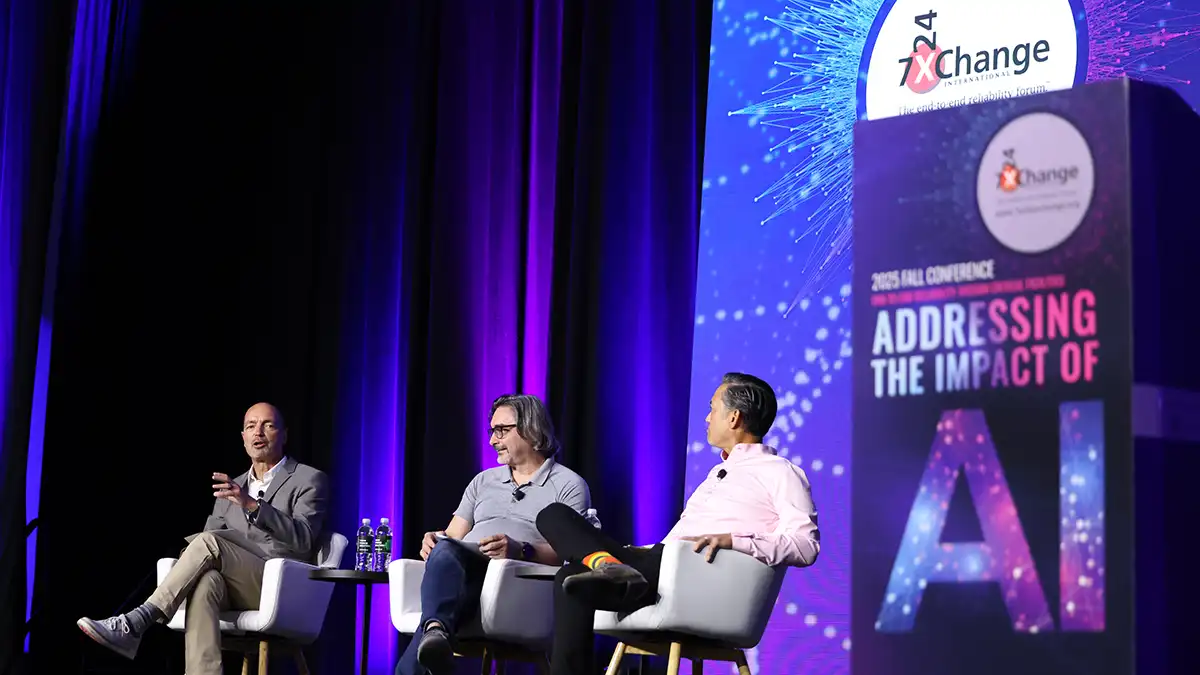
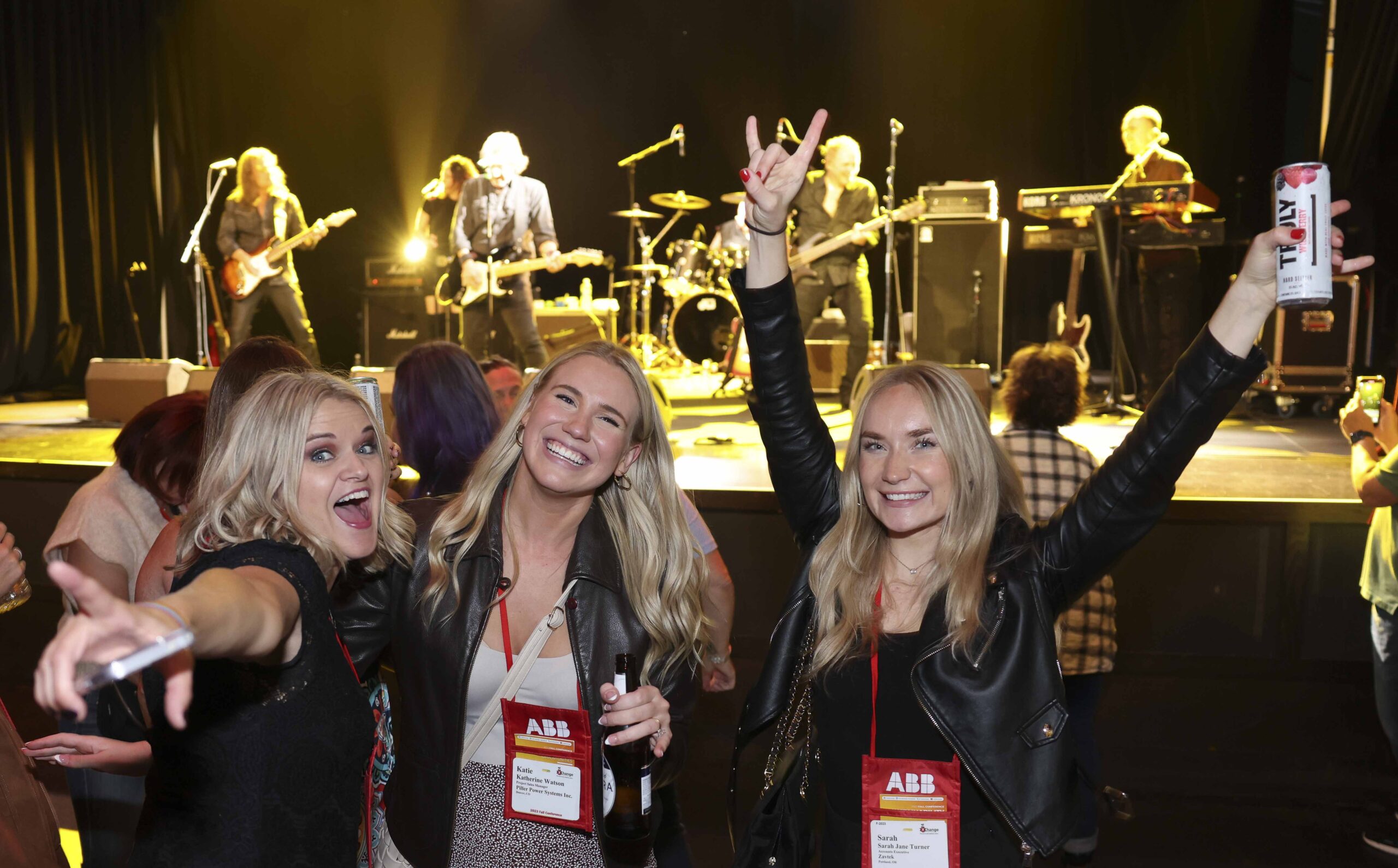
Panel discussion at the 7x24 Exchange 2025 Fall Conference with sponsor branding on the main stage screen

How to brief the photographer for sponsors

Send a one page list before the show with each sponsor’s name, tier, activation location and the one thing they care about most. A title sponsor cares about the stage. A lounge sponsor cares about the line. A lanyard sponsor cares about close ups of badges on real people. That list turns a photographer from a documentarian into a sponsorship fulfillment tool.

Additionally, name the sponsor contact who receives their frames. On our programs the sponsor gets a folder with their name on it, uploading throughout the show, so their social team can post while the event is still running. Sponsors who post during the show generate impressions you can put in the recap.

Beyond that, ask the photographer to shoot every logo placement once with people and once without. The frame with people goes in the recap. The frame without goes in the fulfillment appendix, where a procurement team checks that the signage they paid for actually went up.

Send us your sponsor list and we build the deliverables around it

Every sponsor on your program gets a named folder, a same day upload and the eight frames that make the renewal call easy. One clear number for the whole engagement.

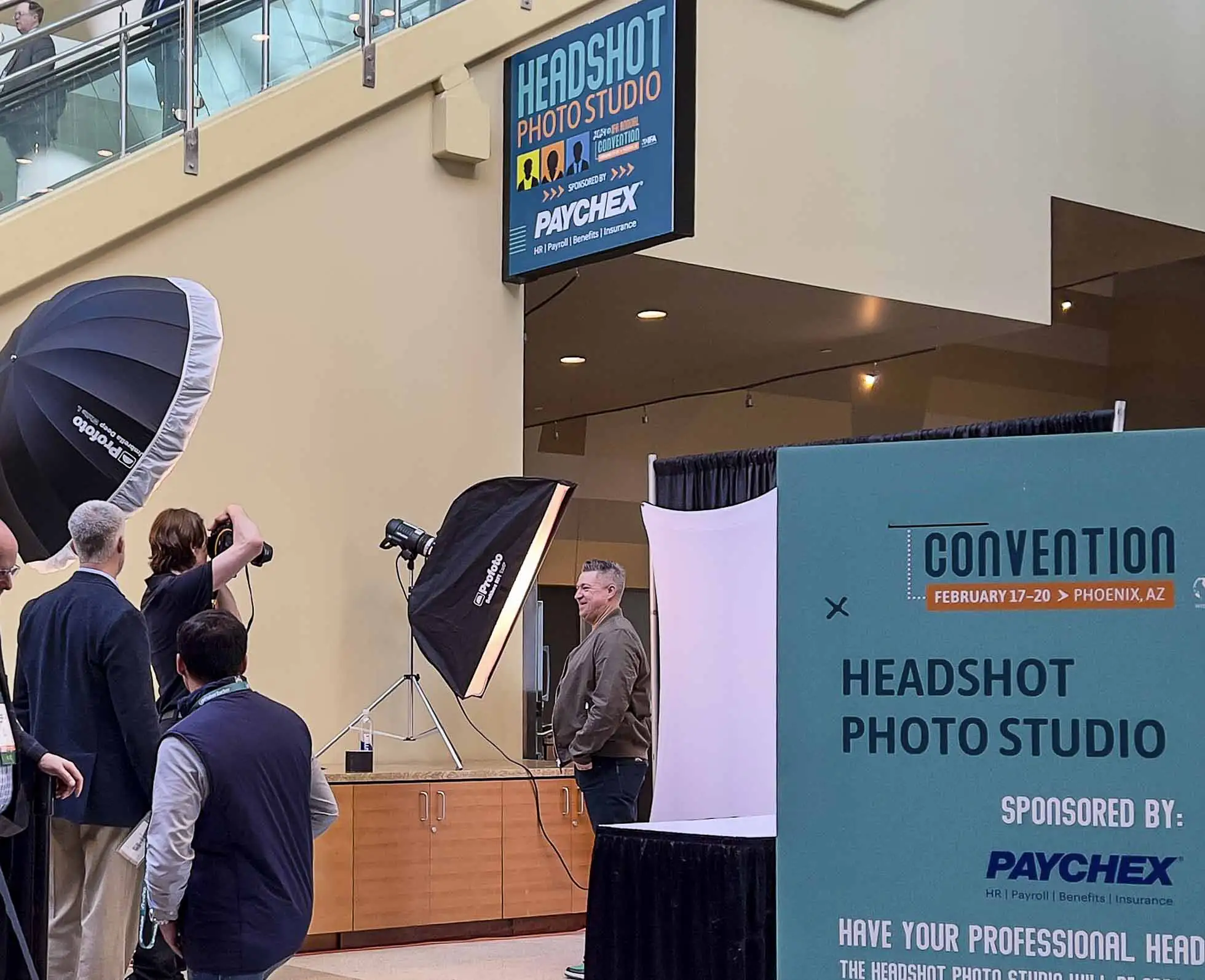
Sponsored convention headshot photo studio on the show floor with the sponsor's branding in frame

Turning the frames into a deck

The recap deck itself should be short. One slide per sponsor at the top tiers, with two or three photos, the impression numbers if you have them and the attendance count. Mid tier sponsors share a slide. Lower tiers get a gallery link with their folder. The whole thing should fit in a five minute read, because the person who decides on the renewal is not going to spend more than that.

In addition, send the deck within two weeks of the closing session, while the show is still fresh and before their next budget cycle opens. In our experience across a decade of association programs, sponsors who get the recap in the first two weeks are far easier to renew than sponsors who get it in month three.

Finally, put the line photo first. Every time.

Onsite printing and social stations as sponsor proof

One more thought for planners selling next year’s packages. An onsite printing or social media station does double duty in the recap. Every branded print that leaves the booth is a sponsor impression that walks around the show for three days, and the station itself produces a continuous line, which brings us back to the money shot.

Similarly, a sponsored headshot lounge produces something no banner can: a list. Every attendee who sits for a headshot hands over an email to receive it. Our post on headshot stations for lead generation covers how that list gets built and delivered, and it is the strongest renewal argument a sponsor can be handed.

Wide angle view of a trade show floor with sponsor pavilions and attendee traffic, used in sponsorship recap decks

Where the sponsor list has been run

We have shot sponsor deliverables at the San Diego Convention Center, the Henry B. Gonzalez Convention Center in San Antonio, the Kay Bailey Hutchison Convention Center in Dallas, the George R. Brown in Houston and at hotel programs in Austin, Phoenix, Orlando and Chicago. The 7×24 Exchange program pictured above is one where the sponsored headshot station keeps coming back, because the sponsor keeps seeing the line.

If you are also thinking about how this year’s photos feed next year’s attendance, our post on conference photos as next year’s registration campaign is the companion piece, and our convention photography services page covers what a full program includes.

FAQ: Sponsor recap photos and post event reports

What photos should go in a sponsor recap?

Eight frames: the logo on the general session screen with a full room, the activation in use, the line at the activation, the sponsor’s speaker from the audience, the badge scan moment, signage in natural traffic, an attendee using the giveaway, and the sponsor’s own team in front of their build.

How quickly should sponsors receive their event photos?

The same day, in a folder with their name on it, so their social team can post while the show is running. The full recap deck should follow within two weeks of the closing session.

How do I brief a photographer for sponsor coverage?

A one page list before the show with each sponsor’s name, tier, activation location and the one thing they care about most, plus a named contact on the sponsor side who receives the frames.

Does an empty booth photo belong in the recap?

One, shot before doors, as a record of the build. It belongs in the fulfillment appendix, not as the hero image. The hero is always the photo with the line.

Does Professional Images Photography cover sponsor deliverables nationwide?

Yes. We build a sponsor shot list into every convention and trade show program, in San Antonio, Austin, Dallas, Houston, San Diego, Phoenix, Chicago, Orlando, Las Vegas and Toronto.

Professional Images Photography shoots the sponsor list in every city your meeting rotates to

Convention, trade show, headshot station and sponsor activation photography nationwide, delivered the same day with full usage rights for your recap and theirs. See where we work.

Your Conference Photos Are Next Year’s Registration Campaign: The 12 Frames to Shoot This Year

The room you fill next year is sold with the photos you shoot this year

Your Conference Photos Are Next Year’s Registration Campaign: The 12 Frames to Shoot This Year

Four in ten meeting planners expect attendance to drop next year. The frames that reverse that trend are shot this year, and they are almost never the podium shots.

Ask a marketing director what conference photos for next year’s registration campaign look like and you will usually get a shrug and a folder of keynote shots. The podium is not what sells a ticket. What sells a ticket is the frame that makes someone who skipped this year feel like they missed something. With 40 percent of planners expecting attendance to fall at least 10 percent in 2026, according to Northstar’s industry forecast, that frame is worth more than it has ever been.

San Diego corporate reception photography of attendees talking in small groups, used in registration marketing

Why the podium shot does not sell a seat

First and foremost, understand what a podium shot communicates. It says a person spoke. It does not say the room was full, it does not say anyone was listening, and it does not say the coffee break afterward was where the real deals happened. Every conference on earth has a podium shot, so it cannot differentiate yours.

Registration marketing runs on a different emotion. It runs on fear of missing out, on the sense that the people who matter in your industry were in that room and the reader was not. That is a photograph of a crowd, a conversation, or a moment of surprise, and it has to be shot on purpose.

Therefore, the shot list we hand a client on the first morning of a multi day program is split in two. Half of it covers the program. The other half is written for the marketing team twelve months from now.

The twelve frames, in the order they happen

Here is the list. Registration desk with a line and badges in hand, because a line says demand. The opening reception from above, so the crowd reads as a crowd rather than as four people at a high top. The general session from the back of the room, wide, with every seat in frame. A tight frame of three attendees laughing mid conversation in the hallway, which is the single most reused photo in every registration email we have ever seen.

Additionally: the exhibit floor at its busiest half hour, the sponsor logo wall with people actually standing in front of it, a hands on demo with a real attendee’s hands, a breakout room where every chair is taken, the awards moment with the winner’s face rather than the plaque, the late night networking event with the lights down, a candid of your keynote speaker talking with attendees after the session, and finally the group photo that everyone tags themselves in.

Moreover, notice what is not on the list. No empty stage, no lectern, no wide of the ballroom before doors. Those go in the gallery, and they are useful to production, but they will never appear on a landing page that asks someone for money.

Aerial conference photography of an outdoor opening reception crowd on the lawn, shot for next year's attendee marketing
Attendees celebrating at convention registration in Houston, a high energy frame for registration marketing
Large group of conference attendees taking an interactive selfie, a registration marketing photo
Houston conference photographer coverage of a full general session audience, the kind of conference photo that drives next year's registration

Full rooms are the whole argument

A packed room is the most persuasive image in event marketing, and it is also the easiest one to miss. The room is only full for the first fifteen minutes of a general session, before the back rows drift out for calls. Shoot it then, from the back, wide and low, so the rows stack up toward the stage. A 1,200 seat ballroom photographed this way looks like an event. The same ballroom photographed from the front looks like a speaker.

Equally important, the outdoor reception and the rooftop deserve the same treatment from above. A crowd on a lawn shot at eye level is a picnic. Shot from a balcony it is a movement. Ask your venue about roof access, mezzanines and skybridges on the site visit, because the overhead angle is the frame that ends up on the registration page hero.

Trade show photographer capturing candid crowd energy on a Houston show floor for conference marketing

Faces, not floors

Furthermore, the frames that convert a reader are the ones with faces they might recognize. A planner scrolling a registration email is scanning for peers. Three attendees laughing in a hallway, a customer at a demo, an executive in the audience taking notes: those tell a prospect that their kind of person was there.

That said, this is where an experienced convention photographer earns the booking. Candid faces need timing and a long lens, not a flash and a request to smile. The reason our galleries carry so many usable hallway frames is that we are already standing in the hallway when the session lets out, because the shot list told us to be.

As a result, plan for two photographers on any program with more than 400 attendees. One stays with the program. One works the corridors, the exhibit floor and the headshot station line, where the best registration photos actually live.

Send us your run of show and we will send back the marketing shot list

Every program we cover gets two lists: one for the gallery, one for next year’s registration page. Quoted as one clear number for the whole engagement.

Crowd of attendees at a rooftop reception at the Henry B. Gonzalez Convention Center in San Antonio, Texas

Delivery that lands while the show is still running

The registration campaign for next year often opens before this year’s show closes. Early bird pricing goes live at the closing session, and the email that announces it needs a photo from that morning. That is why we upload edited selects to a shared folder throughout the show, catalogued by day and session, rather than delivering a hard drive the following week.

In addition, your social team is posting in real time and your sponsors are posting recaps within 48 hours. Same day delivery is not a luxury on a modern program; it is the difference between photos that get used and photos that get archived.

Finally, ask for the marketing frames to be tagged separately in the gallery. A folder named Registration Marketing with forty curated images saves your team a scroll through three thousand files in March.

Live music at a conference opening reception photographed by a corporate event photographer for next year's marketing

Usage rights that do not expire in March

Beyond that, make sure the rights follow the photos. A registration campaign runs for months, across email, paid social, the website and the printed prospectus. If your photographer’s contract limits use to social media for 90 days, the best frame of the year is unusable exactly when you need it. We deliver full usage rights for marketing, press, sponsor recaps and next year’s promotion, with no per image licensing and no reuse fees surfacing later.

Similarly, get a certificate of insurance naming the venue and confirm the photographer records to dual cards. The registration photo you are counting on should not depend on a single memory card surviving the week.

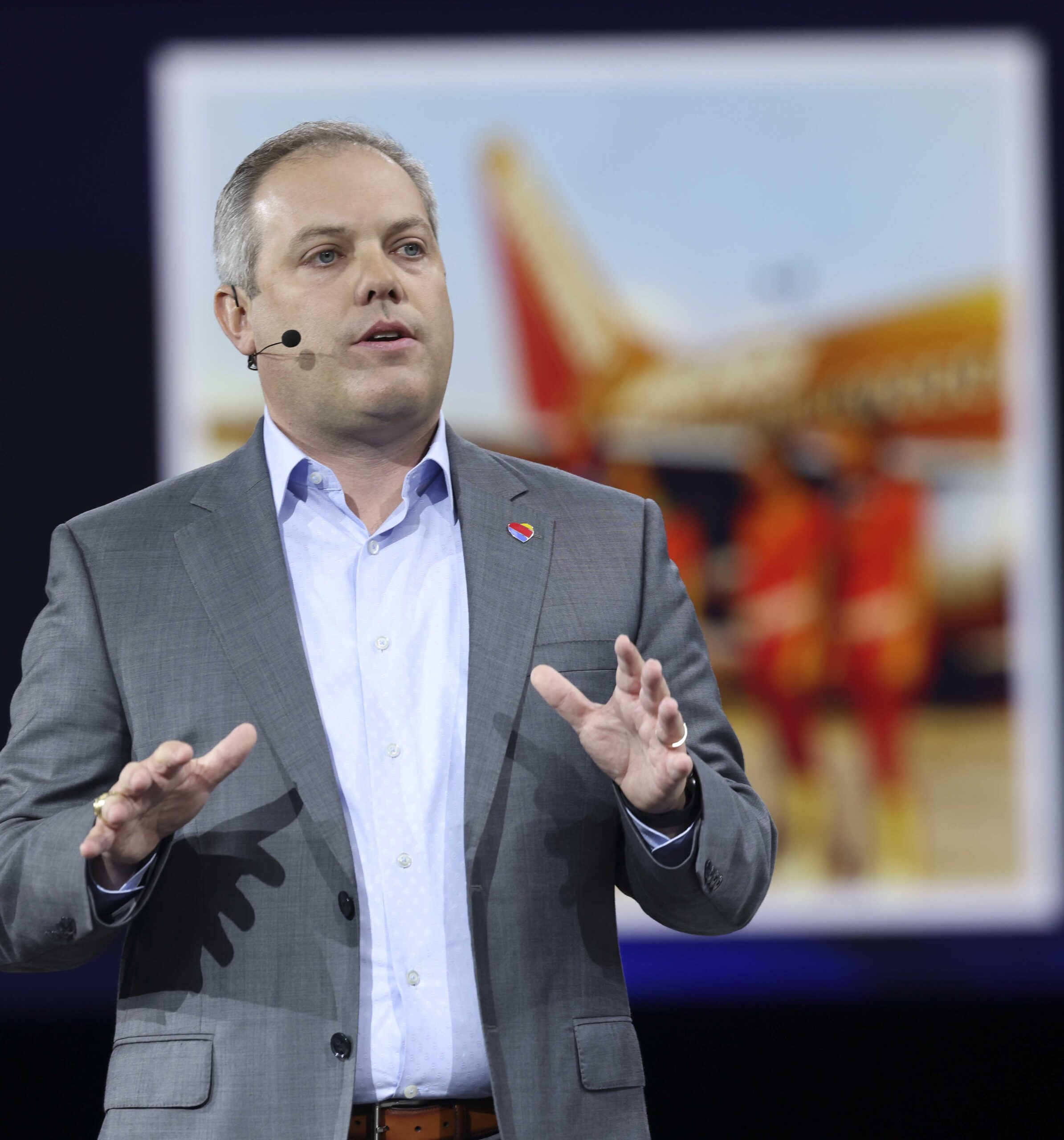
Dallas convention photographer coverage of a Southwest Airlines keynote at the Kay Bailey Hutchison Convention Center

Where this shot list has worked

We have run this list at the San Diego Convention Center, at the Henry B. Gonzalez Convention Center in San Antonio, at the Kay Bailey Hutchison Convention Center in Dallas and at hotel programs in Austin, Houston, Phoenix, Orlando and Chicago. The rooms change. The twelve frames do not.

If you are still choosing a photographer for next year’s program, our guide to how to hire the best convention photographer covers the questions to ask, and our convention photography services page lays out what a full program includes.

FAQ: Conference photos for registration marketing

What conference photos work best for next year’s registration marketing?

Crowd and conversation frames: a full general session shot from the back, the opening reception from above, three attendees laughing in a hallway, a busy exhibit floor and the sponsor logo wall with people in front of it. Podium shots and empty stages rarely convert.

How many photographers do I need to get registration marketing photos?

For programs over about 400 attendees, two. One stays with the program schedule while the second works hallways, receptions and the exhibit floor, which is where the marketing frames happen.

When should conference photos be delivered for registration campaigns?

The same day. Early bird pricing often opens at the closing session, so edited selects should be uploading to a shared folder throughout the show, with a separate curated folder for marketing use.

What usage rights do I need for event photos used in marketing?

Full usage rights for marketing, press, sponsor recaps, the website and next year’s promotion, with no time limit and no per image licensing. Confirm this in the contract before the show, not after.

Does Professional Images Photography shoot conferences outside Texas?

Yes. We are based in San Antonio with offices in Austin and Houston and cover conventions nationwide, including San Diego, Phoenix, Chicago, Orlando, Dallas and Las Vegas, plus Toronto on a regular basis.

Professional Images Photography fills rooms in every city your meeting rotates to

Convention, trade show and headshot photography in San Antonio, Austin, Dallas, Houston, San Diego, Phoenix, Chicago, Orlando and Las Vegas, delivered the same day with full usage rights. See where we work.

Photographing Medical and Healthcare Conferences: What Changes When the Room Is Full of Physicians

Healthcare meetings have rules a general event photographer never trains for

Photographing Medical and Healthcare Conferences: What Changes When the Room Is Full of Physicians

Consent, no photography zones, poster halls, hands on workshops and the compliance team that reviews every frame. A guide for the planners who run medical meetings.

Medical conference photography looks like convention photography from the back of the ballroom, and then a compliance officer asks for the photographer’s consent process and the difference becomes obvious. Healthcare meetings run under rules that a corporate photographer never trains for: patient privacy, pharma spending disclosure, unpublished research on poster boards, and rooms where the camera is simply not allowed. After photographing medical, optometry and pharmaceutical meetings for well over a decade, here is what actually changes.

Houston convention photographer wide view of the Essilor ONE conference general session

Consent is a process, not a sign at the door

First and foremost, most medical meetings post a notice at registration that attendance implies consent to be photographed. That covers the general session. It does not cover a physician who declines, a patient advocate on a panel, or a clinical case image on a speaker’s slide. On a healthcare program the photographer needs to know before the session which speakers and which slides are off limits, and the run of show should carry that information.

Furthermore, some associations issue lanyards or badge stickers that mark attendees who do not want to be photographed. A photographer who is not looking for those markers will put a physician in a marketing photo who specifically opted out. We check for them on every healthcare program and we ask at the site visit whether the association uses them.

As a result, delivery on a medical program includes a flagged folder: frames where a slide, a badge or a face may need a second look from the meeting’s compliance contact before anything is published. That folder is the difference between a photographer who has worked healthcare and one who has not.

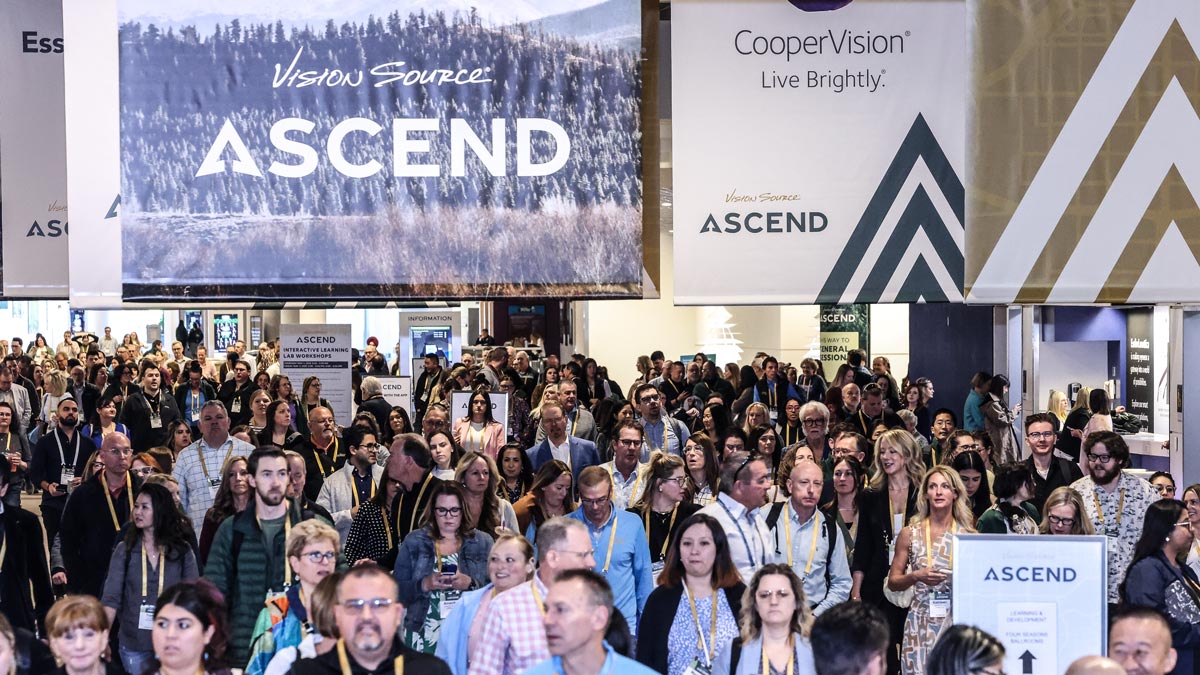
Convention hall crowd at the Vision Source Ascend trade show, photographed by a medical conference photographer

No photography zones and why they exist

Poster halls, certain breakout rooms and any session presenting unpublished data are commonly closed to photography, because a photo of a poster is a leak of a study before its journal date. The photographer needs a floor plan with those rooms marked and a contact who can answer a question in thirty seconds when a session changes rooms.

Equally important, exhibit halls at pharma heavy meetings often restrict photography of competitor booths. A device company will happily have its own booth shot, and it will not be happy to find its booth in the background of a competitor’s photo. We shoot medical exhibit floors tight, one booth at a time, and we clear the wide shots with the show organizer.

That said, none of this makes the meeting harder to photograph well. It makes the shot list more precise, and a precise shot list produces a better gallery.

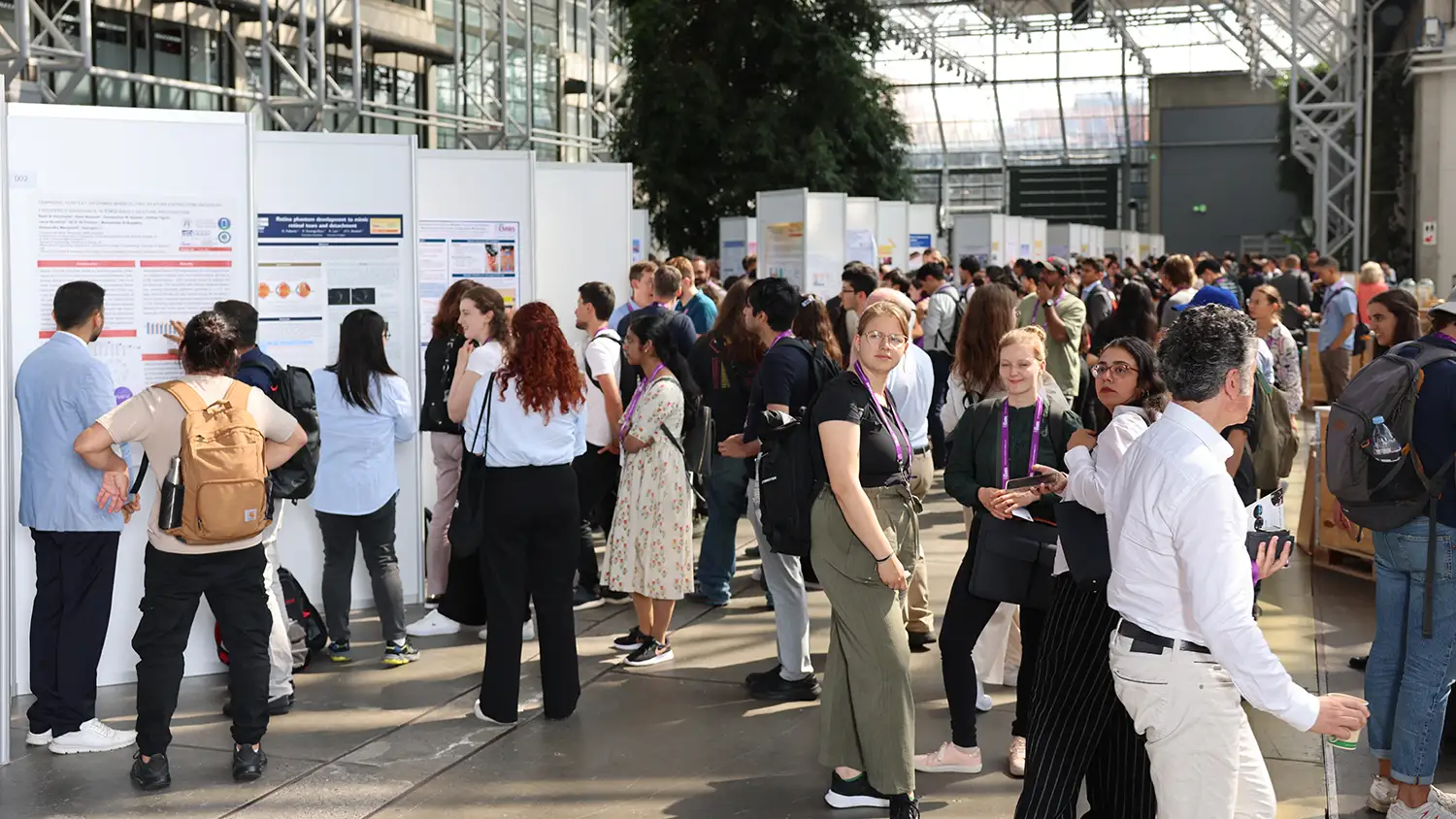
Attendees reviewing research posters during a poster session at a medical conference

Poster sessions, shot the right way

When poster sessions are open to photography, they are the most useful frames on the program for the association’s marketing, because they show research happening rather than being lectured about. The frame is the author and a reader in conversation, with the poster soft in the background and its title illegible. That is the version that goes out. The frame where the poster is readable stays in the flagged folder.

Moreover, poster authors are often the youngest attendees, the residents and fellows the association most wants to recruit for next year. A photo of them presenting, delivered the same day, is the recruiting tool every membership director asks for and rarely gets.

Hands on workshops are the hero content

Injectable demos, ultrasound labs, suture stations, cadaver labs and device training rooms are where medical conference photography earns its keep. Attendees are focused, the lighting is practical and bright, and the frames show clinicians doing something rather than watching something. Those photos carry the education story of the meeting in one image.

Additionally, workshops need the most careful consent handling on the program. Volunteer models and any live demonstration subject need documented consent before the camera comes out, and cadaver labs are generally closed to photography entirely. We confirm each workshop’s status with the medical education director before the first morning.

Beyond that, shoot workshops from the instructor’s side where possible, so the frame shows the technique and the attendee’s attention rather than the back of a head. That angle needs the room to be planned for it, which is a conversation for the site visit.

Medical conference photography of an injectable demonstration at a clinical training workshop
Medical conference photographer coverage of a training workshop with physicians at a healthcare conference
Clinical workshop photographer capturing a hands on session at a medical education conference

Planning a medical, optometry or pharma meeting?

Send us the run of show and the compliance contact. We come back with a shot list that respects the no photography zones, a consent process your legal team can review, and one clear number for the program.

Sponsors, pharma and the compliance review

Pharmaceutical and device sponsors at healthcare meetings operate under spending disclosure rules, which means their marketing teams document everything. The sponsor photos on a medical program go through a compliance review before they are used, so they need to be clean: logo legible, no clinical claims visible on signage in the frame, no attendee identifiable in a way that implies endorsement without consent.

In addition, the sponsor recap on a medical program is often the only proof a pharma marketer can show internally, because so much of the meeting cannot be photographed. Our post on sponsor recap photos that get sponsors to renew covers the eight frames, and on a healthcare program the same eight are shot with the compliance reviewer in mind.

Similarly, a sponsored headshot station works at medical meetings the way it does everywhere else, with one difference: the consent for the headshot is explicit and individual, because the attendee is asking for the photo, which makes it the cleanest sponsor activation a pharma company can fund.

Medical convention exhibitor booth photographer covering a device company on the exhibit floor
Convention photographer coverage of a Vision Source showcase at an eye care conference

What the planner should put in the RFP

Ask for a photographer who has worked healthcare meetings and can describe the consent process without being prompted. Ask for a flagged folder in the delivery. Ask for a certificate of insurance naming the venue and the association, and confirm that every camera records to dual cards, because a workshop cannot be reshot. Ask for same day delivery, because your society’s communications team is posting during the meeting and your sponsors are posting the next morning.

Finally, put the medical education director, the compliance contact and the photographer in one short call the week before the meeting. Twenty minutes on that call prevents every awkward conversation on the floor.

Where we have worked healthcare meetings

We have photographed vision care and optometry programs at the George R. Brown in Houston and at the Gaylord Palms in Orlando, a medical conference at the Moscone Center in San Francisco, and healthcare meetings at the San Diego Convention Center and across Texas. Our medical conference photography page covers the service in more depth, and our convention photography services page lays out what a full program includes.

Orlando, Florida convention photography of a vision care conference general session at the Gaylord Palms

FAQ: Medical and healthcare conference photography

Do I need attendee consent to photograph a medical conference?

A notice at registration usually covers general sessions, but it does not cover speakers or attendees who opt out, patient advocates, or clinical images on slides. A healthcare photographer works from a run of show that marks those, checks for opt out badge markers, and delivers a flagged folder for compliance review.

Can you photograph poster sessions at a medical conference?

Only when the association allows it, because a readable poster is a leak of unpublished research. When allowed, the usable frame is the author in conversation with a reader, with the poster soft and its title illegible.

What should a pharma sponsor expect from medical conference photos?

Clean frames that pass compliance review: logo legible, no clinical claims on signage in the frame, no attendee implying endorsement without consent, delivered the same day to a named sponsor contact.

Are hands on workshops and labs open to photography?

It depends on the workshop. Injectable demos and device training rooms are usually open with documented consent from any live subject. Cadaver labs are generally closed. Each workshop’s status should be confirmed with the medical education director before the meeting.

Does Professional Images Photography cover medical meetings outside Texas?

Yes. We have photographed healthcare, optometry and pharmaceutical meetings in Houston, Orlando, San Francisco, San Diego and across Texas, and we cover medical conferences nationwide.

Professional Images Photography covers healthcare meetings in every city your society rotates to

Medical, optometry and pharmaceutical conference photography in San Antonio, Austin, Dallas, Houston, San Diego, Phoenix, Chicago, Orlando and Las Vegas, delivered the same day with a compliance ready flagged folder. See where we work.

Austin Citywide Without a Convention Center: How Meeting Planners Are Making It Work Until 2029

No convention center, no problem: Austin citywides run on hotel ballrooms until 2029

Austin Citywide Without a Convention Center: How Meeting Planners Are Making It Work Until 2029

Where Austin citywides are running through 2028, and how to staff the photography when your program is spread across three downtown hotels.

If you were handed an Austin, Texas citywide for 2026, 2027 or 2028, you found out fast that the Austin convention center closure changes everything about the run of show. The Austin Convention Center closed in April 2025, the building is gone, and its 620,000 square foot replacement is not expected to open until early 2029. In the meantime, the city is still hosting citywides. They just look different, and after photographing Austin meetings for well over a decade, we can tell you exactly how.

What closed, and when it comes back

First, the facts a planner needs before anything else. The old 365,000 square foot center on the east side of downtown stopped taking events in April 2025, demolition wrapped in late 2025, and construction on the new building is underway on the same six block site. The city is targeting an early 2029 opening timed ahead of South by Southwest.

Furthermore, the replacement is a different animal. At roughly 620,000 square feet it is nearly double the old footprint, and it is designed to be the first net zero carbon convention center in the world. That is worth knowing if your association has a sustainability plank in its site selection criteria.

Until then, there is no convention center in Austin. Every citywide booked through 2028 is a hotel based or split venue program, and that is the reality this guide is written for.

Austin convention photographer coverage of attendees talking at the former Austin Convention Center before its 2025 closure
Austin event photographer view of the Fairmont Austin hotel tower, anchor of the Red River hotel collection for citywide meetings

Where the citywides went

The Visit Austin answer to the closure was to package downtown hotels into walkable collections that behave like one venue. The one most planners are working with is the Red River collection: the Fairmont Austin with about 140,000 square feet of event space across four ballrooms, the Hilton Austin with roughly 95,000 square feet and two ballrooms, and Hotel Van Zandt with about 13,000 square feet, all within five blocks. Together that is 2,168 guest rooms and around 245,000 square feet of meeting space.

Additionally, there is a University collection anchored by the AT&T Hotel and Conference Center near the UT campus, with about 85,000 square feet of meeting space after a recent renovation and four neighboring hotels that bring the group to roughly 900 rooms and 114,000 square feet. The Moody Center sits a short walk away when a general session needs arena scale.

Beyond the collections, the JW Marriott Austin remains the largest single hotel ballroom stack downtown, and the city owned Palmer Events Center at Auditorium Shores is carrying the trade show floors and consumer shows that used to live in the convention center exhibit halls.

What a split citywide does to your run of show

Here is what changes when your program is spread across three buildings instead of one. Your general session is in the Fairmont, your exhibits are in the Hilton, your opening reception is on a rooftop at the JW Marriott, and your poster hall is at Palmer across the lake. Nothing is wrong with any of that, but the timing that worked in a single building no longer works.

As a result, the photography plan has to be built around walking time. A single photographer cannot cover a keynote ending at 10:30 in one hotel and a sponsor activation starting at 10:30 three blocks away. On a split citywide we staff by building, not by day, so each venue has coverage during its live hours and the sponsor logo wall never goes unshot because the photographer was crossing Red River Street.

Equally important, the planner gets one gallery, not three. Every frame from every building lands in the same shared folder, catalogued by day and session, uploading throughout the show. Your communications team should never have to ask which hotel a photo came from.

Austin conference photographer coverage of a keynote speaker in the JW Marriott Austin ballroom
JW Marriott Austin rooftop reception photographed by an Austin corporate event photographer
Austin conference photographer coverage of a packed general session in a Fairmont Austin ballroom during the convention center closure

Ballroom light is not exhibit hall light

There is a technical reason a photographer who has worked Austin hotel ballrooms matters more this cycle than it used to. Convention center halls are tall, bright and evenly lit. Hotel ballrooms are the opposite: lower ceilings, warm chandeliers, and a stage wash that is often the only real light in the room. The frames that look easy on a show floor are the ones that fall apart in a ballroom if the photographer is guessing.

Moreover, hotel ballrooms fill up fast and stay full. The Fairmont general session above is a good example. Wide rows, warm tone, and the only way to show scale is from the back of the room with fast glass and no flash, so the house lighting your production team spent a fortune on stays exactly as they designed it.

That said, this is the good news for planners. A packed 1,500 seat ballroom photographs as full and energetic as a half empty 5,000 seat hall, and those are the images that sell next year’s registration.

Planning an Austin program for 2026 through 2028?

Send us the venues and the dates. We come back with one clear number for the whole split citywide, staffed by building, with galleries delivered the same day.

Exhibits in a hotel: what exhibitors need to hear

Exhibitors who have done Austin before are used to a real exhibit hall. When the show floor is a hotel ballroom or a carpeted foyer, booths are smaller, aisles are tighter, and traffic moves in waves that follow the session schedule. The upside is that a booth in a hotel exhibit space is never far from the coffee, so the traffic is real.

In addition, this is where a second photographer earns the line item. We shoot every booth clean before the doors open, then come back during exhibit hours for staffed and demo coverage, because an exhibitor who paid for a hotel show still expects the same set of trade show booth images they get at McCormick Place. Those deliverables go out the same day so sponsors can post while the show is still running.

A headshot station also works harder in a hotel program than it does in a convention center. The line forms in the foyer between sessions, every attendee hands over an email to get their retouched headshot, and the exhibitor or sponsor hosting the station walks away with the list.

Austin trade show photographer coverage of exhibitor staff working a booth inside a hotel exhibit space

What to put on an Austin RFP through 2028

Finally, a short list of what we have learned to ask for and what planners have learned to specify. Name every venue in the scope, including the offsite reception and the Palmer poster hall, so coverage is staffed by building. Ask for hours of coverage rather than a count of days, because a split citywide has long gaps in one building and overlapping peaks in another, and a single clear number for the whole program is easier to approve than a stack of separate fees.

Request a certificate of insurance that names each venue as additional insured. Downtown Austin hotels each want their own paperwork, and the Palmer Events Center is a city facility with its own requirements. We turn those around within a business day, one per venue.

Lastly, ask for a shot list organized by building. VIP arrivals at the Fairmont, the board photo at the JW, the sponsor logo wall at the Hilton, the ribbon cutting at Palmer. That list is how your photographer knows where to be at 10:30, and it is the difference between a gallery that covers the program and one that covers a hotel. Our Austin office is at 578 Lavaca Street, a few blocks from all of it, so Austin is a local booking for us, and we are listed with the Austin convention bureau as a Visit Austin partner.

Looking ahead to 2029

The new center will change the Austin calendar again when it opens, and the associations that kept their rotation in Austin through the hotel years will have first claim on those dates. In the meantime, the programs we have photographed downtown since the closure have not been smaller versions of a convention center meeting. They have been tighter, more walkable and, frankly, easier to photograph well.

If you want to see what a hotel based Austin program looks like frame by frame, our Austin convention photography page carries galleries from the Fairmont, the JW Marriott Austin and the downtown Marriott, and our earlier post on Austin hotel event photography covers the individual properties in more depth.

Downtown Austin skyline along Lady Bird Lake near the Palmer Events Center, photographed by an Austin convention photographer

FAQ: Austin conventions during the convention center closure

When does the new Austin Convention Center open?

The city is targeting early 2029, timed ahead of South by Southwest. The old center closed in April 2025 and demolition finished in late 2025, so every Austin citywide booked through 2028 is a hotel based or split venue program.

Where are Austin citywide conventions being held during the closure?

Mostly in downtown hotel collections. The Red River collection pairs the Fairmont Austin, the Hilton Austin and Hotel Van Zandt within five blocks, the University collection is anchored by the AT&T Hotel and Conference Center near campus, and the Palmer Events Center at Auditorium Shores is carrying the larger trade show floors.

Can one photographer cover a convention spread across several Austin hotels?

Not well. Sessions in different buildings overlap, and walking time between the Fairmont, the Hilton and the JW Marriott Austin eats the gaps. We staff a split citywide by building so each venue has coverage during its live hours, and every frame still lands in one shared gallery the same day.

Does a hotel ballroom photograph as well as a convention center hall?

Yes, with the right photographer. Ballrooms are darker and warmer than exhibit halls, so coverage relies on fast lenses and no flash to keep your stage lighting intact. A full 1,500 seat ballroom reads as more energetic in photos than a half empty exhibit hall, which helps next year’s registration marketing.

Is Professional Images Photography local to Austin?

Yes. Our Austin office is at 578 Lavaca Street downtown, a short walk from the Red River hotel collection and the JW Marriott Austin, and we have photographed Austin conventions, trade shows and corporate meetings for well over a decade.

Professional Images Photography covers Austin and every city your meeting rotates to

Convention, trade show and headshot photography in Austin, San Antonio, Dallas, Houston, San Diego, Phoenix, Chicago, Orlando and Las Vegas, with the same crew following your annual meeting from city to city. See where we work.
Go to Top